

Eduardo López: Ten Years of Uërani
- Sofía Stamatio

- Jun 18, 2025
- 8 min read

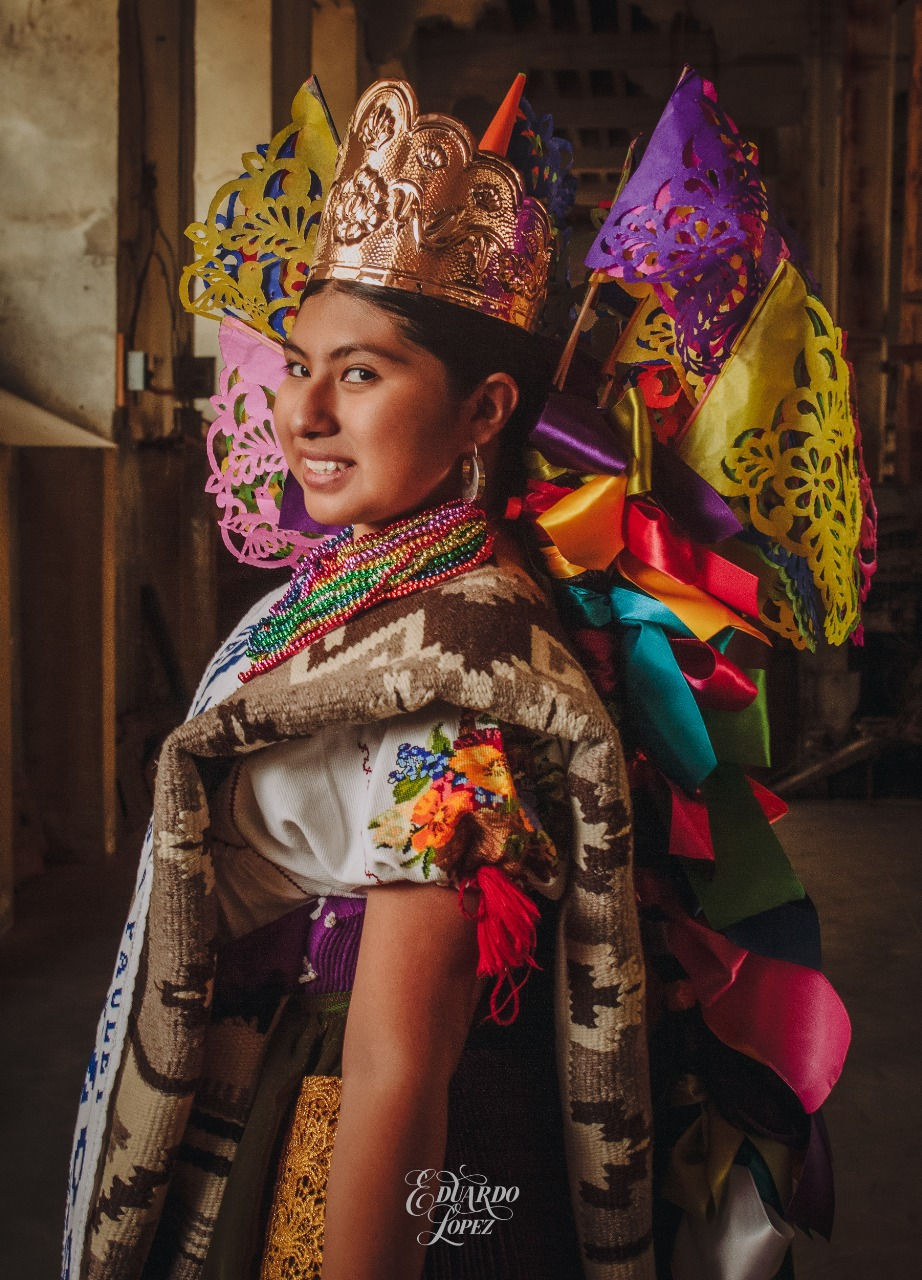
I met Eduardo López González (Paracho, 1990) in 2022, when we mounted his photographic exhibition “Jucheti/Juchari Parhakpini” at the Centro Cultural Antiguo Colegio Jesuita in Pátzcuaro. I was astonished not only by his technical impeccability, but also by his ability to portray beyond the obvious—as if he wielded the mythical Sword of Omens from the Thundercats. His photographs encapsulate atmospheres, aromas, sounds, and emotions. Maybe that's what makes a great photographer. As photographer Alejandro Martínez puts it, his work is a “dialogue between identity, the lens, and the soul.”
Self-taught and identifying first as “Purépecha, then Mexican,” Eduardo’s work evokes imagery from the golden age of Mexican cinema, with its chiaroscuro contrasts, portraits of women, and richly detailed clothing. His photographic series “Lauderos” was a finalist in the 2017 Humanity Photo Awards by the China Folklore Photographic Association and UNESCO. That same year, he began his project “Uarhiecha”, a series that documents traditional clothing in Purépecha communities across 22 municipalities in Michoacán, Jalisco, Guerrero, and Guanajuato. He has participated with this project in various national and international competitions. In 2015, together with friends and colleagues, he founded the artistic collective Uërani, inspired by the Purépecha word meaning "to go out." Eduardo says it represented them in their act of “leaving home”: going to other places, visiting other towns, and showing what they discovered. Interviewing him makes his generosity, consistency, curiosity, and humility abundantly clear—qualities that no doubt have greatly contributed to his success.

Why was Uërani born?
It all started because the idea was to bring together all the activities we’d been doing here in Paracho for many years with other friends: concerts, exhibitions, and art and culture events that required collaboration. At one point, we were working on a small community library we had here in Paracho. We did many things like that until we decided to give it a name so we could encompass everything under one space. That’s how Uërani was born. Initially, it was meant to support ourselves and back the initiatives we wanted to pursue in the future.
So you’re mainly a collective focused on cultural management and dissemination?
That was always the main goal. Over the years, various people have joined us to work on the Facebook page, share texts, news, and memes. We created the website a few years ago too. It was paused at times because we didn’t have enough time to keep it up. But what we’ve always done is documentary photography—“documentary” in quotes, because we don’t strictly stick to that style.
Would you say photography has been the main driving force?
That’s basically what’s kept Uërani going—being able to take photos from within the Purépecha community, not only for it, but so more people can learn about what goes on here.
I started photography about twelve or thirteen years ago. In our friend group, someone had to document what we were doing, and most didn’t have the drive or interest, so it fell to me. I was completely self-taught—trial and error. I started with a basic camera, and shortly after, a community orchestra from Nurío invited me to take photos and videos of their performances. They bought me my first DSLR, and from there I started doing more and more. I took over 500,000 shots with that camera until it stopped working.
I’ve always liked cinema, and that’s my goal—to make films. But when I started seeing what was needed, I realized it was really complicated: lots of equipment and people. So I thought if I fully learned how to use a camera, it’d be easier. I started with photos to eventually transition into video. I also do video now, but less frequently. And with photography, I found that people really liked what I was doing.

And you’ve taken photography and video even further, becoming true artistic ambassadors of the Purépecha people.
It got to the point where people started asking me to show other things, to visit new places, to present different aspects—and I really enjoyed it. It’s been incredibly interesting to share what I discover along the way.
What drives us is representing what’s in our communities: the work of artisans and artists. We’ve been drawn to traditional clothing, luthiers, musicians—things that might seem common to us but still have immense potential to capture people’s attention.
Absolutely! Otherness always fascinates. Yet your work highlights Purépecha worldview and material culture without a folkloric gaze or romanticizing the idea that communities must remain static.
We try not to stick to the same old notions that traditions or Indigenous practices must remain unchanged. They evolve, they change, and they adapt to new generations. For example, we’ve really enjoyed working with regional musicians—both traditional and more contemporary.
On your website, you write: “We were fire from the sky to become a corn seed.” Has Uërani evolved as well?
When you think about everything we’ve done in just over ten years, it’s been quite a journey. We’ve changed a lot—how we see things and how we do them. Many people who were once part of conversations, projects, and ideas are now in different places or have taken entirely different paths.
Uërani has earned its place through talent and sustained work as a benchmark in cultural dissemination in Michoacán. Your Facebook page has 42,000 followers and a 100% positive rating. Are you satisfied with what you’ve achieved?
Over the years, we’ve done six exhibitions outside Paracho and collaborated on many events with musicians and visual artists from our communities. But beyond awards or accolades, I think the greatest achievement is that many of the images born from this project have been embraced by our people. Seeing those photos reproduced on posters, murals, even embroidery—it tells us our work resonates.
Often when we arrive somewhere, someone will say, “Hey, I follow your page,” or “I love what you do,” or “I remember when you visited such-and-such community.” That kind of feedback is what we see as success—being part of the community. That’s the greatest reward.
Your Facebook page has lovely comments: “It’s wonderful to find a place where vision and commitment to culture come together,” “I love that you highlight our tradition that we proudly carry in our hearts,” “Your projects are simply enchanting. Thank you for celebrating our traditions”...
That’s the kind of thing we consider success. It shows us whether we’re headed in the right direction. Those are the real achievements: to be part of the community.
How have you navigated the desire to share your roots with the world while facing more rigid interpretations of Purépecha tradition?
We’ve had many conversations about self-perception and self-determination. That’s the most important part. We always questioned what it means to “be Purépecha.” If someone is born here but their parents aren’t Purépecha, are they? What if someone is born elsewhere to Purépecha parents—are they still Purépecha?
I ended up self-declaring as Purépecha, even though I don’t speak the language. But is it my fault my grandparents didn’t pass it on? I like to introduce myself that way—that I am, that I’m from the Purépecha community of Paracho. Many times people have said I don’t belong, that I’m turish—a foreigner—because I don’t speak the language or don’t think the way someone from a community “should,” or because Uërani “sees everything from the outside.”
We try not to stick to the same old notions that traditions or Indigenous practices must remain unchanged. They evolve, they change, and they adapt to new generations.

But some people don’t understand that we do this because we feel it—it’s part of who we are, and we are part of the community. We usually seek the support of our communities, because they’re who we work for. We want to share what we know, to give people who had to leave a space to reconnect with our stories and traditions—even understand why we do certain things.
Over the years, we’ve met people with very misguided ideas about what it means to live in or be part of a community. We believe the only way to change those views is to show all the beauty and goodness here: the craftwork, the art, the history, the language, the traditions. Lately, we’ve been focusing a lot on writing, trying to offer a new perspective on community life.
Yet for turish like me, Uërani is a window into Purépecha culture that is simple, respectful, and deeply loving.
It’s always fascinating to learn. When we heard about kaxúmbekua—the ethical and moral values of the Purépecha worldview—it was very compelling. We’ve had many debates on it. Some define it as being good, having values or morals, and so on. But I think it goes deeper. It’s more about the responsibility one has within the community—not letting it die.
We want to share what we know, to give people who had to leave a space to reconnect with our stories and traditions—even understand why we do certain things.
That’s always been my goal and what we’ve tried to reflect: that if we’re here and have the means to do something, we should—because it’s our responsibility. To use what we have, develop our talents or skills so more people can feel represented, can feel comfortable and proudly say, “This is where I’m from.”

This year, Uërani celebrates ten years of collective work in art, culture, and Purépecha identity. How will you celebrate?
At first, we thought of just throwing a party—but I realized it was more complex than that. Working with people has shown us a different way of feeling good about ourselves and what we do. So we decided the best way to celebrate is by doing what we love, together with the artists and artisans we’ve met along the way.
We organized two collective exhibitions—one with visual artists, and one with artisans. We invited them to create special pieces that express what it means to them to be Purépecha, and we gathered more than 40 artists and artisans from different communities. We’ll also host a textile appreciation workshop with Dr. Amalia Ramírez, whose writings sparked our interest in traditional clothing—so it’s very special to have her join us.
The Jesuita Community Orchestra and singer-songwriter Yunuén Bautista from Uruapan—who blends Mexican music in unique ways—will also perform. The Michoacán Independent Film Festival will be part of our documentary and short film showcase. And during the opening of the “Ser P’urhépecha” exhibition, the Juchari Uinapikua Orchestra from UMSNH will give a special performance. The children’s orchestra “Tarhiata Jimpane” from Cheranástico will also play during the artisan showcase and runway, which will include textiles, jewelry, pottery, and carved wax. We’ll also do a photo session. That’s our way of celebrating—by doing what we’ve always done and walking the photographic path we’ve been on.

And after this Saturday, what does the future look like?
There are many things I’d like to do. I’ve always wanted to explore communities that were once Purépecha but are now in other states. I also want to follow Purépecha communities outside Mexico—especially in the U.S.—who continue to hold celebrations, rituals, and traditions, and see how they’ve adapted them. That really fascinates me.
We also plan to publish a book featuring some of the photos we’ve taken over the years, along with new ones. The images will be paired with poetry—I’ve been writing a lot lately. I’ve also been invited to contribute to a publication on the rebozo from Michoacán, which we hope will be ready before the end of the year.

In a text published on Uërani’s website on May 9, titled “Art (They Say) Is Not for Everyone,” Eduardo writes:
The anniversary collective exhibition is not just a showcase of works; it’s a manifesto: art is by and for everyone. By democratizing access to creation and contemplation, we dismantle cultural elitism and transform our territories into living spaces where new ideas blossom and community bonds are strengthened. (...) We propose a path of self-management, collaboration, and advocacy for inclusive public policies. Only then will art cease to be a luxury and become the engine of liberation and dignity our region deserves.
Long live Uërani—its talent and its commitment!
The activities to celebrate Uërani’s 10th anniversary kick off at 10:30 am at the Museum of Popular Arts and Industries with the opening of the collective exhibition "Todo cabe en un oficio"(“Everything Fits in a Craft"). Find the full program here.
Explore Eduardo López and Uërani’s extensive and fascinating work on Facebook (@uerani), Instagram (@ueranimx), YouTube (@Uërani), and their website www.uerani.com.mx.


Comments